What Is Domain History and Why It Affects Your SEO Results


I’ve done a lot of work with expired domains and, if you ask me, at the moment, every decent domain name you register today has some history. If you are like me and always looking for a good .com, there are no “new” domains to be registered, they’ve all been owned and probably dropped in the past.
Domain history is one of the first checks in my SEO audit (and you’ll soon find out why I bother with it).
But first a quick definition (rule no.1 in SEO content writing: we define what we write about).
What is domain history
Domain history refers to the complete record of a website’s past, including previous ownership, content, backlinks, potential penalties, and reputation. This historical footprint can significantly impact your current SEO performance, even if you’ve completely overhauled the site.
Key components of domain history
This is a big one, since you can make or break a new website.
Previous content and purpose
As mentioned before, the chances for you to land a brand new domain name are zilch, unless it’s an unique brand, so expect some history.
This “new” domain most likely has hosted some content before you acquired it. It could have been an e-commerce store, a blog, a corporate site, or something else entirely. Search engines retain memory of what the site used to be about, which can create conflicts with your current content strategy.
We have 2 possible issues here: different niche, which is not a deal-breaker, as you can easily rebrand and rank, or illegal/porn content, which is a doozy to fix (in some cases it might be better to look for another one).
Quick story: before immigrating to the US, I had a network of websites in Romanian and English. One of the niches: orthodontics. Already had a pretty sweet domain name in English, so translating it on a Romanian website made sense.
As I was still dabbling in expired domains (which I do recommend, if done properly), I found one that had the main keyword in it “aparat dentar” (which translates loosely as dental braces).
Pretty nifty Domain Rating (if you’re using an expired domain, at least get one with a decent backlink profile), so, at least in theory it would start ranking faster.
I quickly designed the logo, installed WordPress, the works.
Took me 2-3 days to translate the articles (we were pre-AI era), I got Google Analytics and Google Search Console tied to it, created a Facebook page, submitted for indexation and got ready to some initial traffic.
Nothing.
OK, Google is slow to index a new website, let’s push for some Facebook engagement.
I tried to share one of the posts, Facebook gave me an error “this type of content is not allowed on Facebook” (or something like this).
Hmm? It’s orthodontics.
Then it hit me: let’s see on Archive.org what’s the deal with this domain (research I should have done before getting it, but hey, when it’s 11 bucks it doesn’t matter).
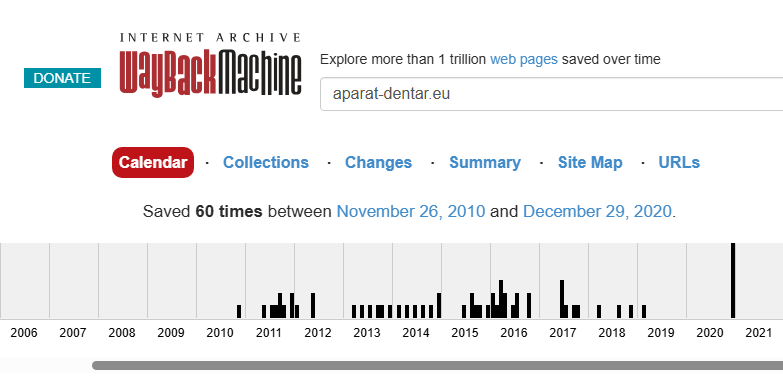
Holy smokes!
My beautiful orthodontics domain clearly didn’t seem to target this niche in the year before I purchased it, let’s just say it was more geared towards the technicals of baby making. Very graphic, too!
So, this is how Ramona got herself a domain name previously used for porn.
I looked again at GSC (Google Search Console), NOTHING in 10 days. Figures.
What did I do?
Registered a new one (yeah, I did check its previous content history this time), did 301 redirect on the “nasty” one (to still get some of that link juice) and the new website was indexed in Google in 2 days.
Backlink profile
.. the reason why I constantly spend hours researching domain names and finding decent ones, when it’s time to “attack” a new niche in my network. A good backlink profile can do wonders when it comes to faster rankings and even trading/selling backlinks.
The backlink profile means all the links pointing to your domain from its previous life remain part of its profile.
These could be high-quality links from authoritative sites, or they could be spammy links from link farms and low-quality directories. Your research is 2 fold:
- see if you don’t have any “skeletons” in your link profile (in this case don’t bother with the domain name or expect less of a boost);
- look for in-niche or high authority domains linking to you.
In this case, as soon as you rebuild the website, make sure that all the pages that got those backlinks are up and running ASAP, so that you fully utilize the “link juice”.
High-authority backlinks are the sole reason why it’s worth it to look into expired domains. In the past 15 years I got some pretty sweet deals. The latest one was a city-related domain name, dropped after a big event (created mainly for that). It had a ton of links, wikipedia included and I paid 40 bucks on it.
Less than 1 hour after the purchase, I already got an email from a domain hunter willing to pay $700 for it.
Didn’t sell, we built case studies in the past and we’re in the process of a big revamp, but it just shows you how important is to do a bit of research, before you jump head-first into a domain.
Penalties and reputation
If a domain was previously penalized by Google for black-hat SEO tactics, malware, or policy violations, those penalties may still affect the site even under new ownership. Manual actions can sometimes transfer with the domain if not properly addressed.
Now, if you ask me, manual penalties are not a huge deal, we have helped clients in the past remove them (in this case your case is handled by a person and you can appeal, after you’ve cleaned up your mess).
Anyways, probably you don’t want to have to deal with this, as you develop your website, so a clean domain name is to be desired.
In my case the domain was clearly flagged by Facebook and Google. It made more sense to just restart the project on a new domain and redirect, than go through all the hassle of cleaning its tarnished reputation.
Age and trust
Older domains with consistent, positive histories generally carry more trust with search engines. Google tends to favor these domains (if everything else is equal).
However, age alone isn’t beneficial if that history includes problems, as you have already found out from my failed website launch.
Why domain history matters for SEO
With domain authority becoming more important for SEO and AI, getting a domain with a decent DR can help a lot.
Just like in my previous example (the domain I purchased after being dropped at the end of the event), trying to acquire those links would have been a huge undertaking (both in time, if you still hope to get free ones, and money, as some of those would be at least $300-$500 a pop).
By spending 1 hour to do my research and paying 40 bucks, I was already ahead of the game. Even as we are rebuilding the content, Google indexes my new pages and articles almost instantly and we are ranking faster than we’d do with a “vanilla” domain.
Trust and authority inheritance
You inherit both the good and bad reputation of a domain. A domain with a strong, clean history gives you a head start with search engine trust (and not having to spend tens of thousands of bucks to build the same backlink profile).
Conversely, a problematic history means you’re climbing uphill from day one, or you just have to ditch it and cut your losses.
Indexing and ranking challenges
Search engines may be confused if your new content differs drastically from historical content.
This can lead to indexing delays, ranking fluctuations, or difficulty establishing topical authority in your niche.
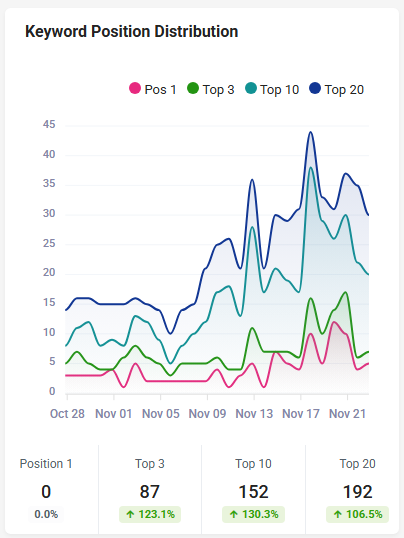
It can be done – I have repurposed an AIDS-related website into the auto-immune diseases niche (ironically years before my own daughter was diagnosed wih Type 1).
With a proper topical map and some high-quality content you can offset this disadvantage.
If you do hit the same sub-niche though, with the backlinks you have already (provided you do bother to rebuild that content fast), you stand great chances of ranking fast and well.
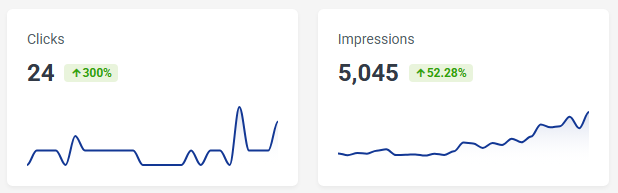
See in the image to the left how fast 2-3 articles got us to rank for new keywords and in decend positions, literally after a few hours of SEO content writing.
Penalty recovery requirements
Discovering you’ve purchased a penalized domain means you’ll need to invest time in disavowing bad links, submitting reconsideration requests, and rebuilding trust before seeing positive SEO results.
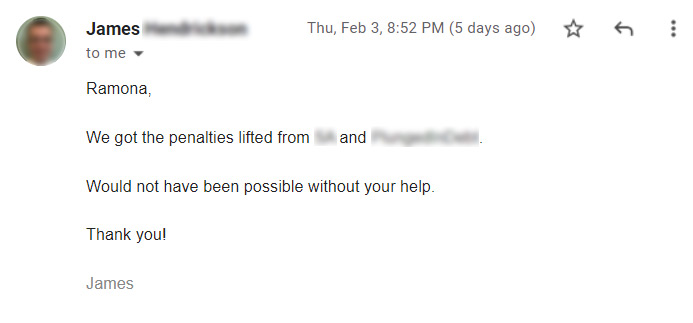
We have successfully recovered penalized domain names for our clients, but it does take time.
Competitive advantage or disadvantage
A premium aged domain with relevant backlinks will accelerate your rankings. That’s why we still use expired domains and sometimes pay a little fortune on them.
Same niche domains with high-level backlinks work spectacularly well, so don’t shy away from them.
How to Check Domain History
There are 2 options here:
- you haven’t purchased it: Wayback Machine is the best to use.
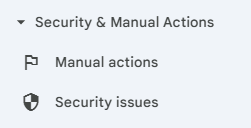
- you got it and after 2 weeks you are not getting anything out of GSC (provided you are not blocking search engines) – in this case the security &manual actions section in Google Search Console is your friend.
You can also look at WHOIS records, again helpful to see if your new domain name is compromised.
What’s next?
If you have your eyes on a domain name and are not yet sure if to get it or not, we can look together. Schedule a 1-hour consultation (just $150) and we can do some research together.
If your new domain name is penalized, order an SEO audit and we’ll find out together how to get it back online.